
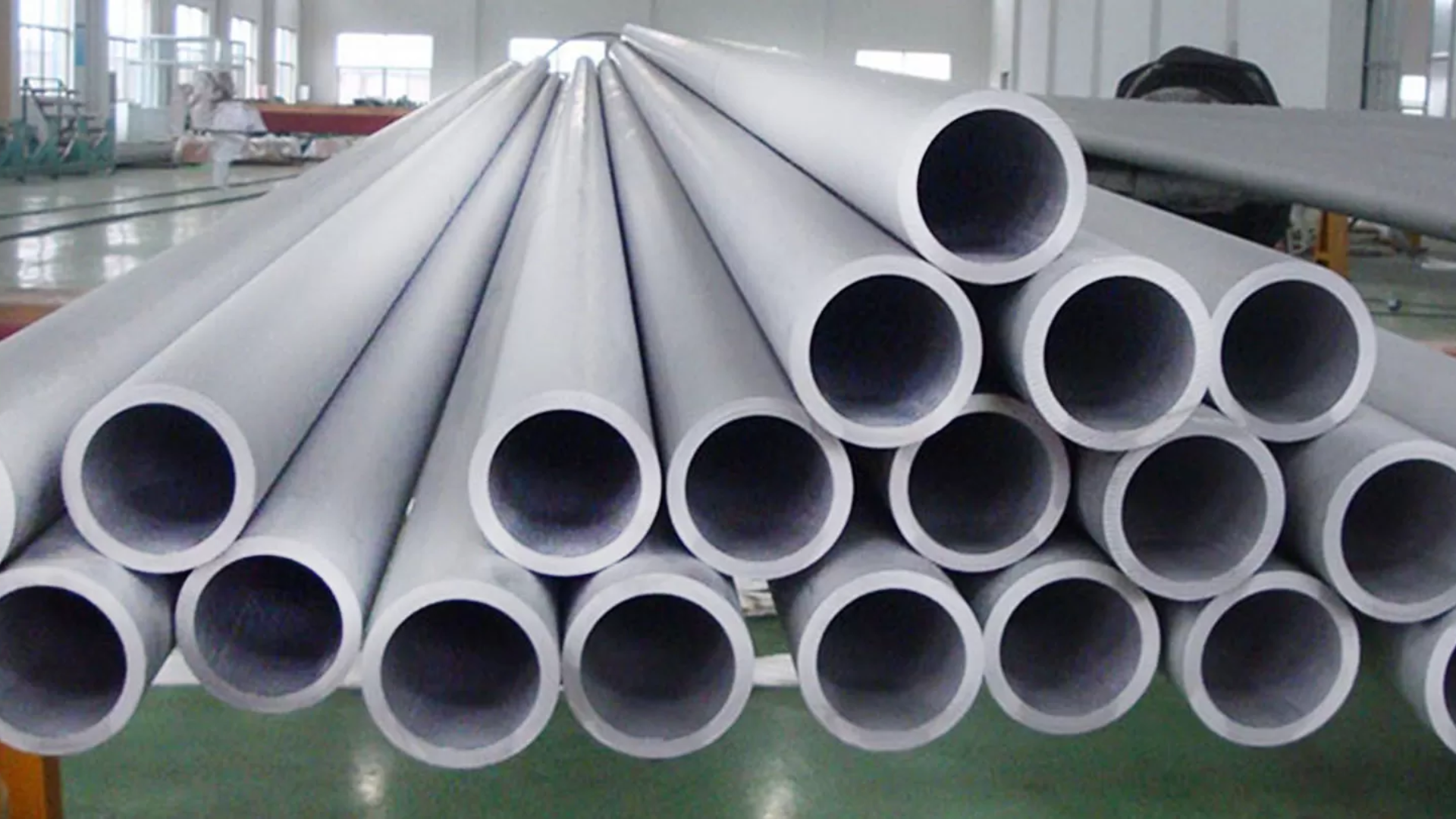
Pipes and tubes made with INCONEL alloy 625 can be used in sour gas pipelines, seawater heat exchangers, power plants, and chemical processing plants because of its corrosion-resistant properties.
Typical marine applications of INCONEL 625 Round Bar include steam liner bellows, sheathing for undersea communication cables, and various submarine components such as auxiliary propulsion motors and quick-disconnect fittings. INCONEL 625 Round Bar is commonly used in steam liner bellows, sheathing for underwater communication cables, and submarine components such as quick-disconnect fittings and auxiliary propulsion motors. Additionally, we provide inconel 625 sheets.
5 Uses for Inconel and Why to Use it
- Five Inconel Use Case Examples.
- Oil & Gas Extraction. Inconel is preferably used in the oil and gas production industry owing to its high temperature tolerance and oxidation resistance properties. ...
- Heat Treat Applications. ...
- Rapid Temperature Changes. ...
- Saltwater Applications. ...
- Jet Engines.
Inconel 625 Round Bar properties
Exceptional material strength
The strength of Inconel 625 Round Bar is not only due to its nickel-chromium base but also due to niobium and molybdenum, which harden the alloy. Niobium and molybdenum interact to strengthen the alloy matrix, resulting in high strength without precipitation-hardening. This superalloy has a tensile strength of 690 MPa and a yield strength of 275 MPa.
High temperature resistance
Having a melting point of about 1300°C and a thermal expansion coefficient of 1.28 x 10⁻⁵ 1/K (at 20°C), Inconel 625 can withstand a wide range of temperatures.
Inconel 625 Round bar forms a natural protective layer when its titanium and niobium compositions increase dramatically at high temperatures with oxidising agents.
Corrosion resistance
Having a unique combination of components makes Inconel 625 Round Bar very corrosion resistant, which explains its excellent performance in high salinity seawater, as well as in milder environments such as fresh water and standard atmospheric conditions.
Its nickel-chromium matrix protects Inconel 625 Area from oxidising agents, while molybdenum prevents pitting corrosion. In 15% sulfuric acid, the material corrodes at only 0.188 mm per year.
High level of fabricability
The Inconel 625 alloy was designed to be easier to weld than earlier alloys, with no cracks after welding when exposed to strain and temperature changes. The high creep resistance and yield strength of this superalloy make it an ideal choice for welding tubes, piping, and plant equipment.
What is Inconel 625 Used For?
The nickel content of Inconel 625 Area is between Inconel 330 and Inconel 600 in the high-nickel superalloy Inconel family. As a result of this combination, along with columbium and molybdenum, Inconel has a very high melting point and performs well in high temperatures. Besides being resistant to chloride pitting and fatigue stress, Inconel 625 also has a high creep rupture strength and oxalic resistance. Compared to other Inconel variations, Inconel 625 is also very easy to weld.

In addition to jet engine exhausts, flare stacks, seawater equipment, and chemical plant equipment, Inconel 625 is extremely chemical and temperature resistant.
A solid solution alloy of nickel, chromium and molybdenum alloy with niobium is INCONEL 625. molybdenum distorts the alloy's atomic matrix, thus providing particularly high strength in the annealed condition without a deliberate strengthening heat treatment.
A nickel-chromium-molybdenum alloy, alloy 625 is used for its high strength, high toughness and excellent corrosion resistance. The strength of alloy 625 is derived from the stiffening effect of molybdenum and niobium on its nickel-chromium matrix.
With its high temperature resistance and oxidation resistance, Inconel is perfect for the oil and gas extraction industries. The oil and gas industries need a superalloy metal that can withstand extreme environments and corrosive gases.
Nickel-chromium-molybdenum alloy Inconel 625 (UNS N06625) has excellent corrosion resistance in corrosive media, especially pitting and crevice corrosion, making it particularly resistant to corrosion in pits and crevices. A corrosion attack will, however, occur in Inconel 625 in an aggressive environment.
Tig welding is often used to weld Inconel. Where possible, use Inconel 625 Bar filler metal to weld Inconel. Inconel 625 Bar is usually the most weldable Inconel alloy and can be used to weld two pieces together. It can also be used to weld stainless steel and other dissimilar metals.

Five Inconel Pipe Uses
Oil & Gas Extraction
Its high temperature tolerance and oxidation resistance make Inconel a preferred material for oil and gas production. Because they can withstand harsh temperatures and corrosive, volatile gases, super-alloy metals such as Inconel are needed by the oil and gas industries.
It is very beneficial to use Inconel 625 Bar super alloy in natural gas processing systems. Due to their exceptional thermal fatigue strength and oxidation resistance, Inconel 625 Clad Pipes are also used to segregate extracted fluids or for inline steel transfer.
Heat Treat Applications
It is known that Inconel 625 Bar has tensile strength of 13.3 KSI at 2,000 degrees Fahrenheit, making it the ideal material for heat treatment applications—in contrast to stainless steel alloys such as Grade 304, 316, and 330 SS. At 2,000 degrees Fahrenheit, Inconel 625 Bar maintains its 13.3 KSI tensile strength.
Baskets made of super alloys, like Inconel, won't lose form as easily as ones made of most stainless-steel alloys when subjected to harsh heat treatment.
Rapid Temperature Changes
In some manufacturing procedures, high- and low-temperature operations can be followed quickly. A single Inconel basket can be used in operations where temperatures range from close to cryogenic lows to heat treatment highs thanks to the remarkable oxidation tolerance of certain Inconel alloys at both high and low temperatures.
Saltwater Applications
In maritime applications, Inconel Alloy 600 Pipes are frequently used due to their exceptional resistance to sodium chloride (salt) at various temperatures. In situations involving salt-based procedures or factories near the sea, Inconel might be a suitable choice for washing basket parts.
However, some stainless steel alloys are also extremely resistant to seawater. When, then, will Inconel be considered the better choice? As a general rule, if high temperatures of greater than 1,000 degrees Fahrenheit were not an issue, this super alloy would actually outperform grade 316 stainless steel. Inconel can withstand greater temperatures than 316 SS.
Jet Engines
While cooling techniques can swiftly lower temperatures, they can easily go beyond the limits of some metals. Inconel 600 maintains good tensile strength and oxidation tolerance despite frequent temperature variations caused by combustion cycles and cooling methods used in the aerospace industry. When extreme temperatures and chemical resistance are required, Inconel is the ideal material since some metals' oxidation tolerance is typically weakened at high temperatures.